
Your deck should be safe, stable, and ready for summer gatherings—not a list of problems you dread. Inspecting for rot, loose fasteners, and sagging joists will show you whether a quick board replacement or a structural deck repair is needed, so you can prioritize fixes that restore safety and extend the deck’s life.
This post Deck Repairs walks you through common structural issues and how to choose repair materials so you can make informed, cost-effective decisions. Expect clear guidance on spotting trouble, deciding what to replace, and picking materials that resist weather and reduce future maintenance.
Common Structural Issues
You need to inspect load-bearing components and walking surfaces regularly. Pay attention to moisture damage, fastener corrosion, movement, and visible decay when assessing safety and necessary repairs.
Rotten Beams and Joists
Rotten beams and joists compromise the deck’s load path and often start where water pools or flashing fails. Probe suspicious wood with a screwdriver; soft, crumbly wood or cavities behind paint indicate decay. Check the underside of the deck and where joists meet the ledger and posts—rot there can allow sagging or collapse.
Replace any joist or beam that loses more than 25–30% of its cross-section or shows dark, damp wood that won’t dry. Use pressure-treated or naturally rot-resistant lumber sized to match existing members, and install metal joist hangers rated for exterior use. Ensure flashing between ledger and house is intact and that you provide ventilation and drainage to prevent recurrence.
Loose or Damaged Boards
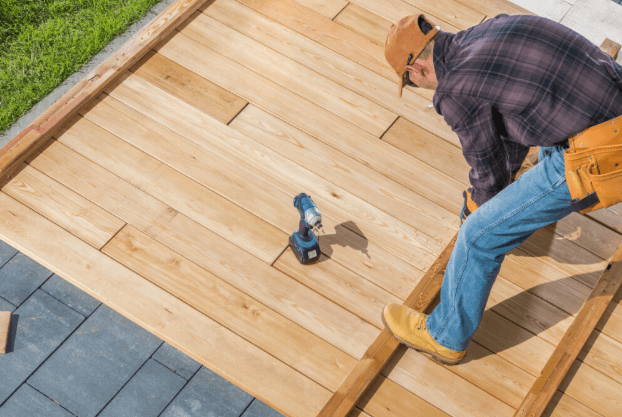
Loose or damaged deck boards create trip hazards and accelerate structural problems if left unaddressed. Look for boards that flex underfoot, have large gaps, severe warping, or fasteners that spin or back out. Surface rot, deep splits, and extensive cupping mean replacement rather than patching.
For repair, remove affected boards and inspect underlying joists for hidden damage. Fasten replacement boards with corrosion-resistant screws or hidden fasteners following proper spacing and end gaps for the board material. Tighten or replace loose rail and stair connections, and replace any corroded nails or bolts with coated lag screws or structural connectors designed for exterior use.
Choosing Repair Materials
Pick materials that match your budget, expected lifespan, and maintenance tolerance. Focus on board type, fastening systems, and finishes that suit your local climate and the load your deck carries.
Composite vs. Wood Options
Composite boards (capped-polymer or wood-plastic blends) resist rot, insect damage, and fading better than untreated wood. You pay more up front, but you avoid annual staining or sealing; expect warranty terms (often 10–25 years) and follow manufacturer fastening and spacing specs to prevent warping or hidden-mold issues.
Solid wood choices include pressure-treated pine, cedar, and tropical hardwoods such as Ipe. Pressure-treated lumber gives the lowest initial cost and good structural strength, but you must apply preservative finishes and check for checking or splintering annually. Cedar looks better naturally and resists decay, while hardwoods offer exceptional density and abrasion resistance but require predrilling and corrosion-resistant fasteners. Match board thickness, joist spacing, and fastener type to the material you choose.
See also: How Trusted Company Setup Consultants Simplify Business Growth
Weather-Resistant Products
Choose stainless steel or coated fasteners to prevent staining and corrosion on both wood and composite decks. Hot-dipped galvanized screws may be acceptable for pressure-treated lumber, but use 316 stainless for coastal salt exposure to avoid rust streaks and structural failure.
Select paints, stains, or sealers formulated for your material: water-repellent preservatives for wood and manufacturer-recommended cleaners/UV-protective finishes for composite. Use flashing, joist tape, and end-seal treatments on cut boards to block moisture intrusion. For snow or heavy-sun regions, prioritize low-absorption boards and breathable finishes to prevent trapped moisture and surface degradation.

 By
By