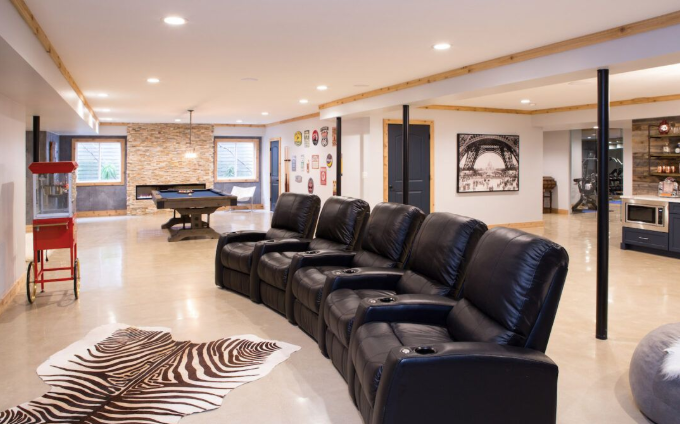

Basement entertainment room design ideas emphasize a cohesive theme, calibrated acoustics, and flexible layouts. Start with a calm color palette and purposeful lighting to define zones for viewing, gaming, and conversation. Prioritize sound-absorbing materials and a seating arrangement that enhances immersion. Subtle storage solutions conceal cables and equipment, keeping lines clean. The balance between comfort, tech placement, and budget-friendly finishes shapes the mood, but a careful approach reveals unseen opportunities—and a path to a distinctly personal space.
Create a Mood: Theme, Color, and Lighting Foundations
To establish a cohesive mood, the baseline combines a clear theme, a deliberate color palette, and purposeful lighting. This approach defines a theme palette and lighting layers that support acoustic comfort while guiding seating arrangement and space optimization.
Integrated storage solutions, budget friendly finishes, and tech integration reinforce a zoning strategy, flow optimization, and overall design clarity.
Acoustic Comfort and Seating for Movie Nights
Acoustic comfort and seating for movie nights build on the established theme, color, and lighting foundations by prioritizing sound behavior and viewer positioning within the room.
Soundproofing tricks and ergonomic seating converge to minimize reflections and fatigue, delivering immersive listening and viewing.
Thoughtful material choices, modular seating, and precise speaker placement optimize balance, clarity, and comfort for freedom-loving audiences.
Space-Savvy Storage and Tech Setup
Space-Savvy Storage and Tech Setup centers on clean integration of equipment and hidden cavities that preserve the room’s visual rhythm. The approach prioritizes minimalism and accessibility, enabling flexible layouts.
Soundproofing options are integrated with decor, while power cable management remains discreet via routed channels and concealed conduits.
The result is organized, efficient, and visually coherent, supporting effortless entertainment experiences.
Zoning, Flow, and Budget-Friendly Finishes
Zoning, flow, and budget-friendly finishes translate spatial strategy into lived experience, ensuring distinct zones without visual disruption and aligning surface choices with cost-conscious constraints. The approach emphasizes zoning strategies that delineate activity areas while preserving openness.
Material selection favors budget friendly finishes that read cohesively, support acoustics, and reduce maintenance, enabling flexible entertaining layouts and responsive adaptability within a basement environment.
Frequently Asked Questions
How Can I Prevent Basement Dampness in a Media Room?
To prevent basement dampness in a media room, ensure proper ventilation and moisture barriers; install a dedicated dehumidification system and sump pump, monitor humidity levels, and seal exterior foundations to minimize basement moisture and safeguard the space.
What’s the Best Wall Treatment for Sound Control?
A recent study shows 60% of room improvisations fail without proper wall treatment. The best wall treatment for sound control involves balanced soundproofing options and targeted acoustic treatments, delivering precise, design-forward results while preserving design freedom and integrity.
See also: AI and the Future of Personalized Technology
Which Projector Setup Works in Low Ceilings?
A short-throw projector with a fixed mount is recommended for low ceilings. Projector placement should align with seating while ceiling height considerations minimize shadows and glare, optimizing image size and clarity within compact vertical spaces.
How Do I Access Hidden Ventilation Without Noise?
Access hidden access panels discreetly located behind cabinetry to access ventilation without noise. The design-forward approach prioritizes minimal disruption, using sound-dampening seals and vibration-reducing mounts to mitigate ventilation noise while preserving function and aesthetic freedom.
What Are Beginner-Friendly Smart Home Integrations?
Beginner-friendly automation includes simple voice assistants and smart plugs; budget-friendly integrations pair lighting, climate, and security within a cohesive ecosystem, allowing effortless control. The approach prioritizes design-forward aesthetics, professional tone, and an audience seeking freedom.
Conclusion
In the end, the basement becomes a quiet refuge where design and function intertwine. Soft textures gather like whispering walls, while light reshapes every corner into a listening breath. The room, modular and calm, invites conversation, film, and games without shouting for attention. Cables hide, seats adapt, and acoustics cradle sound as carefully as a pianist cradles a note. A cohesive mood lingers, steady as a heartbeat, turning a concrete space into a timeless, immersive retreat.

 By
By