
You rely on school bus transportation to get students to school safely, affordably, and on time, and this article shows how those goals actually happen behind the scenes. You’ll learn what makes Bus Transportation systems safe and efficient, who sets eligibility and routing rules, and how planning and operations keep daily runs reliable.
Expect clear, practical explanations about how districts decide who rides, how stops and routes are determined, and what steps operators take to manage schedules, vehicles, and safety. By the end, you’ll understand the key decisions and trade-offs that shape every morning and afternoon route.
Understanding School Bus Transportation
You will learn the main service types, the regulatory requirements that keep routes and vehicles safe, and the practical benefits school buses provide to students and families.
Types of School Bus Services
School districts and private operators commonly offer five service types: regular home-to-school routes, late/activity buses, special education transport, field-trip/charter services, and contracted shuttle routes. Regular routes follow fixed stops and schedules; they prioritize age-based eligibility and neighborhood walk zones. Late/activity buses run after-school programs and sports schedules, often requiring separate registration and different stop patterns. Special education transport includes door-to-door or curb-to-curb service with trained attendants and accessible vehicles; routes and vehicle features match students’ Individualized Education Programs (IEPs). Charter and field-trip buses provide temporary service for excursions, requiring additional insurance and driver qualifications. Contracted services let districts outsource routing and fleet management to third-party companies.
Safety Standards and Regulations
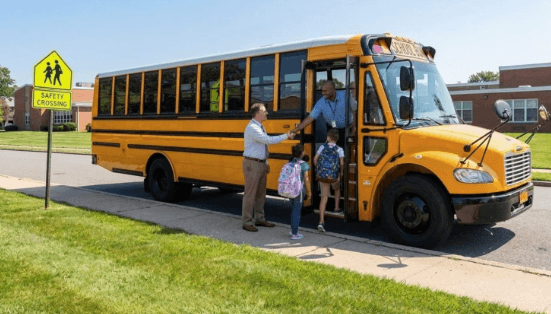
You must follow federal, state or provincial, and local rules that govern vehicle design, driver qualifications, and on-route procedures. Buses typically meet standards for high-visibility color, flashing lights, stop-arms, reinforced seating, and compartmentalization; many jurisdictions also require regular vehicle inspections and maintenance logs. Drivers need background checks, drug and alcohol testing, and specific licensing such as a Commercial Driver’s License (CDL) with a school bus endorsement. Policies often cover student behavior, bus evacuation drills, and procedures for loading/unloading to protect children outside the bus. Some regions mandate technology like GPS tracking, camera systems, and crossing-control arms to reduce risks near bus stops.
Benefits for Students and Parents
Riding a school bus reduces your household travel time and fuel costs by consolidating dozens of car trips into one scheduled route. Buses provide consistent daily attendance support, which helps students arrive on time for classes and after-school activities. For students, buses offer supervised interaction that builds social skills and independence while trained drivers and regulated equipment generally lower per-trip injury risk compared with private vehicles. You also gain predictable scheduling and fewer parking hassles at busy schools. For families of students with disabilities, specialized transport ensures access to education through tailored routes and trained staff.
Planning and Managing School Bus Operations
You will focus on efficient routing, consistent driver competence, and purposeful technology to reduce costs, improve safety, and keep on-time performance high. The next subsections explain concrete steps you can take in each area.
Route Optimization Strategies
Start by mapping student addresses, school bell times, and vehicle capacities into a routing tool that supports time windows and heterogeneous fleets. Prioritize consolidating stops within safe walking distances and grouping students by grade level or neighborhood to shorten dwell time.
Use these specific tactics:
- Route clustering: create neighborhood clusters of 8–12 stops to reduce turns and idle time.
- Time-window constraints: schedule arrivals within a 5–10 minute window to match bell times and minimize wait.
- Load balancing: assign buses so no vehicle exceeds 90–95% of seated capacity during peak runs. Run iterative simulations before the term starts and after major schedule changes. Monitor route KPIs weekly—miles per route, on-time percentage, and ride time per student—and adjust routes monthly based on traffic patterns and ridership shifts.
See also: How to Build a Consistent Visual Style for Your Photography Brand
Driver Training and Certification
Require each driver to hold state CDL with passenger endorsement and complete a standardized pre-service training of at least 40 hours. Your program should include hands-on vehicle checks, student loading/unloading drills, and defensive driving modules tailored to school bus scenarios.
Implement these elements:
- Annual refresher: 8–16 hours covering emergency evacuation, special-needs securement, and winter driving.
- Skill assessments: semiannual road tests and quarterly route observations with documented performance metrics.
- Recordkeeping: a centralized file for certifications, medical cards, and demerit points. Pair new drivers with experienced mentors for the first 30 days of routes. Use incident reviews to identify training gaps and to update policies promptly.
Technology Integration
Choose systems that address routing, safety, maintenance, and communications rather than single-point solutions. Integrate a routing engine with telematics, student-rider tracking, and your maintenance CMMS to create a closed-loop operating picture.
Key capabilities to require:
- Telematics: GPS tracking at 10-second intervals, idle-time alerts, and geofence-based arrival notifications.
- Student tracking: RFID or BLE check-in/out tied to parent notifications and rider manifests.
- Maintenance integration: automated preventive work orders triggered by odometer or engine-hours thresholds. Establish data governance: define who can access live tracking, set retention policies, and automate KPI dashboards. Train dispatch staff to use alerts for real-time rerouting and to communicate delays to parents and schools within two minutes of detecting an issue.


 By
By