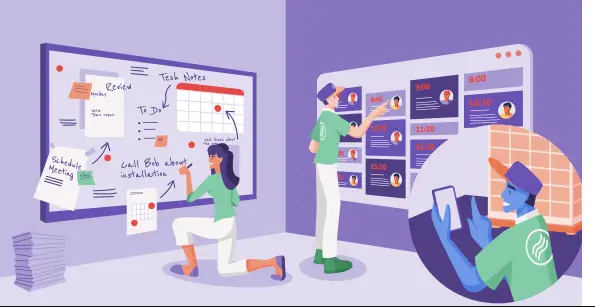

You need a single system that keeps technicians, schedules, inventory, and customer info aligned in real time so jobs finish faster and costs stay down. A field service management platform centralizes dispatch, scheduling, mobile work orders, and reporting so your team works smarter and your customers get faster, more reliable service.
This article Field Service Management Platform shows which capabilities matter, how platforms streamline daily ops, and how to pick the solution that fits your workflows and budget. Follow along to see practical comparisons and questions to ask vendors so you can choose a tool that actually improves field performance.
Key Features and Capabilities
You’ll look for features that cut administrative time, boost first-time fix rates, and keep technicians connected to inventory and customer history. Focus on capabilities that deliver precise job records, efficient routing, and mobile tools that work offline.
Work Order Management
Work order management centralizes job details so you can assign, track, and close tasks with minimal friction. A robust system stores customer history, asset records, warranties, and past invoices on each work order so technicians see context before arrival.
Use templates and checklists to standardize inspections and compliance steps; this reduces errors and speeds training. Automated status updates and configurable approvals let you enforce SLAs and billing rules without manual intervention.
Look for built-in inventory links that reserve parts on the work order and trigger reorder points. Integration with your accounting or ERP prevents double-entry and ensures labor and parts post correctly to jobs.
Scheduling and Dispatch
Effective scheduling matches technician skills, certifications, and current location to job requirements, improving first-visit completions. Use calendar-based views with drag-and-drop rescheduling, color-coded skill tags, and workload indicators to prevent overload and balance routes.
Route optimization should consider travel time, traffic, and appointment windows to reduce drive time and fuel costs. Real-time updates and ETA sharing keep customers informed and let dispatch reassign jobs when delays occur.
Support for recurring jobs, priority flags, and on-call queues helps you manage preventative maintenance and emergency calls without disrupting planned work. Exportable metrics—utilization, response time, and SLA compliance—let you measure dispatcher performance.
Mobile Workforce Integration
Mobile apps should give technicians full offline access to work orders, step-by-step procedures, and asset documentation so work continues in low-connectivity areas. Include photo capture, barcode/QR scanning, and signature collection to validate work and speed invoicing.
Make forms dynamic: conditional fields and guided workflows reduce mistakes and ensure technicians collect required compliance data. Synchronization should be incremental and conflict-aware, merging notes, time entries, and parts usage reliably when connectivity returns.
Ensure role-based permissions control access to pricing, customer contacts, and sensitive account info. Push notifications for new assignments and parts arrivals keep technicians aligned with dispatch without constant phone calls.
Choosing the Right Solution
Focus on growth capacity, fit for your trade, and vendor support. Prioritize measurable criteria: user count growth, required integrations, specific trade workflows, implementation timeline, and ongoing SLAs.
See also: Renovations London: Expert Home Upgrades and Property Refurbishment Advice
Evaluating Platform Scalability
Assess how the platform handles increased users, jobs, and data without costly reconfiguration. Request benchmarks for concurrent users, average job throughput, and database retention limits. Check whether licensing is per-user, per-device, per-job, or consumption-based; predictable pricing matters as you scale.
Confirm multi-site and multi-region support if you operate across geographies. Look for tiered role-based access, automated provisioning (SCIM/SAML), and API rate limits. Verify performance under peak loads with a pilot that simulates your busiest week.
Also evaluate data model flexibility: can you add custom fields, new asset types, and workflows without developer support? That reduces long-term cost and speeds feature adoption.
Industry-Specific Functionality
Identify workflows and compliance requirements your trade demands, and map them to platform features. For example, HVAC teams need parts inventory and warranty tracking; telecom crews need GIS/mapping and circuit-level asset hierarchies; utilities require crew safety checklists and outage management.
Ask for reference customers in your industry and for proof-of-concept scenarios using your typical job types. Verify built-in templates for inspections, regulatory forms, and certification tracking. Check whether the mobile app supports offline work, barcode/RFID scanning, and photo annotations tied to specific work orders.
Confirm the platform’s marketplace or partner network for add-ons like mobile diagnostics, parts procurement, or ERP connectors. Prebuilt integrations reduce custom development and speed time to value.
Implementation and Support Considerations
Define a realistic implementation timeline with milestones: data migration, user training, pilot rollout, and full cutover. Require the vendor to provide a detailed project plan, resource commitments, and escalation paths. Ask whether they offer dedicated onboarding specialists or rely on self-service materials.
Evaluate training formats: live instructor-led sessions, role-based video modules, and in-app guidance. Measure support responsiveness by testing response SLAs for critical incidents and change requests. Clarify who owns customizations and how upgrades affect them.
Finally, plan for ongoing operations: determine backup/restore policies, data ownership, and exit clauses. Ensure your contract includes defined uptime, maintenance windows, and a roadmap communication process so you can align future releases with your operational needs.


 By
By