
If your garage door sticks, sags, or looks dated, replacing it restores curb appeal, improves insulation, and reduces safety risks. A properly chosen and installed replacement door can save you money on energy and repairs while making your home more secure and attractive.
In Garage Door Replacement You’ll learn what options suit your budget and climate, how the replacement process works, and when to hire a pro versus tackling parts of the job yourself. Expect clear steps on choosing materials, matching styles, and understanding costs so you can move forward with confidence.
Garage Door Replacement Overview
You’ll learn when a door needs replacement, what door types are available, and how material choices affect cost, insulation, and maintenance.
When to Replace a Garage Door
Replace your door if panels sag, cracks penetrate insulation, or springs and tracks fail repeatedly. Multiple repairs in a short time often cost more than a new door.
Safety failures—broken springs, bent tracks, or doors that disconnect from the opener—require immediate replacement if repair won’t restore reliable operation.
Look for water damage, rusted hardware, and warped sections that let light or pests through. Energy loss from an uninsulated door raises heating and cooling bills; consider replacement when insulation R-value is low or uneven.
If the door no longer seals against the weatherstrip or the opener can’t lift it without strain, replacement improves performance and reduces emergency service calls.
Types of Replacement Garage Doors
Sectional steel doors dominate residential replacements for durability and cost-efficiency. They come insulated or non-insulated, and pair well with standard torsion-spring systems.
Aluminum doors suit wider openings and resist rust but dent more easily; choose reinforced frames if you plan to add insulation.
Wood doors deliver high curb appeal and customization but demand regular staining or painting and cost more initially. Fiberglass mimics wood grain and resists rot in humid climates, though it can yellow with sun exposure.
Roll-up (coiling) doors work best for tight headroom or commercial-style garages; they sacrifice some insulation and aesthetics but save space.
Choosing Replacement Materials
Match material to budget, maintenance tolerance, and climate. For low cost and low maintenance, choose galvanized steel with baked enamel finish. It resists dents and requires minimal upkeep.
If you need thermal performance, pick doors with polyurethane or polystyrene insulation and a higher R-value. Insulated steel sandwich panels reduce noise and heat transfer.
Opt for wood or composite when aesthetics and customization matter; expect to refinish wood every few years. In coastal or high-humidity areas, choose corrosion-resistant metals (aluminum or stainless) or fiberglass to avoid rust.
Also consider hardware quality—rollers, springs, and tracks affect long-term reliability. Upgrading to heavier-duty springs or ball-bearing rollers adds upfront cost but reduces service calls.
See also: How Trusted Company Setup Consultants Simplify Business Growth
Garage Door Replacement Process
You will assess the door condition, choose parts and labor, and follow a step-by-step installation sequence that addresses safety, fit, and function.
Preparing for a Garage Door Replacement
Start by inspecting panels, tracks, rollers, springs, and the opener for dents, rust, frayed cables, or broken springs. Measure the door width, height, headroom, and jamb depth so replacement panels or a prehung door will fit without modification.
Check insulation needs (R-value), material choice (steel, wood, aluminum), and weatherseal type to match energy and curb‑appeal goals.
Secure permits if your municipality requires them and confirm local building-code clearances. Arrange safe access: clear vehicles, move tools, and lay down protective floor covering. Have these tools and supplies on hand: socket set, level, pry bar, winding bars (for torsion springs), C‑clamps, ladder, and safety glasses.
Professional vs. DIY Replacement
Consider spring work risk: torsion springs store lethal energy and require specialized winding bars and experience. If springs, cables, or alignment are compromised, hiring a licensed garage door technician reduces injury and liability risk. Professionals also handle permit paperwork and ensure balanced operation, limiting premature opener wear.
DIY can be economical if you replace panels or a sectional door and you have a strong helper. Limit DIY to tasks you can complete safely: removing old panels, fitting new panels, and mounting preassembled tracks and opener with manufacturer instructions. If you lack tools or experience with spring winding, plan a contractor visit.
Garage Door Installation Steps
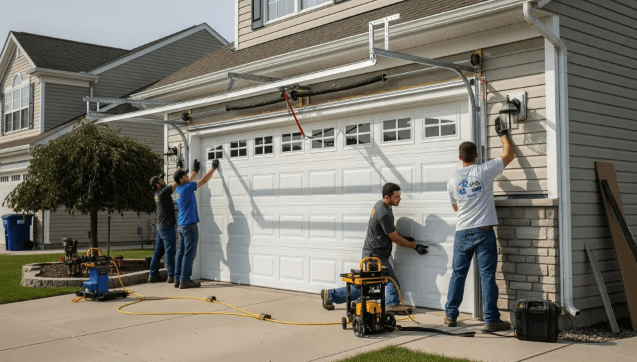
Remove the old door and disconnect the opener. Label hardware and take photos to speed reassembly. Unbolt tracks and carefully lower sections with at least one helper to avoid damage.
Install bottom bracket and weatherstrip, then set and level the first panel. Fit rollers into the track and secure hinges as you stack each panel. Align vertical tracks and tighten fasteners; test vertical travel for smooth seating.
Install springs and cable assemblies per manufacturer torque specifications, or have a pro tune torsion springs. Mount the opener, attach the trolley and safety sensors, then program limits and test force settings. Finish with final balance check: disconnect opener and manually move the door—smooth, level travel with no binding indicates correct setup.


 By
By